
About Rob-in-Hood Digital
An online IT careers academy offering structured, hands-on courses in cybersecurity, DevOps, and AI, with clear learning pathways and guidance for U.S. learners entering in-demand tech roles.
- Three career tracks
- Instructor-reviewed labs
- U.S. learner support
Who we are
A small academy built for people changing careers
Rob-in-Hood Digital started as a teaching project among working engineers who kept getting the same question from friends and colleagues: what should I actually study if I want to move into security, cloud, or machine learning work? The answers we gave in person became the outline of our first course, and the format has not changed much since. We build short, sequenced lessons around real tasks, then give learners a place to practice those tasks with guidance close at hand.
We are an independent online course provider, not a university and not a staffing agency. Our instructors write their own material, keep it current against the tools and platforms used in day-to-day IT work, and teach in the same vocabulary a hiring manager or a senior teammate would use. Where a track depends on a third-party certification exam, we prepare learners for the exam objectives and point them to the official exam body for scheduling and pricing. We do not issue those certifications ourselves.
We are based in San Francisco, and our learners are mostly adults studying around a full-time job — often in the evenings, in short focused blocks. Everything we publish is written with that schedule in mind: no filler lectures, no hour-long detours into theory that will not come up in practice, and clear stopping points so a learner can finish a session in under an hour and know exactly where to resume.
How we choose what gets taught
Four decisions shape every course before a single lesson is recorded. They are the questions we ask when we sit down to plan a track, and the answers are what you will see reflected in the syllabus.
Every module maps to a task someone actually performs in an entry-level or mid-level IT role. If a topic is interesting but rarely shows up in day-to-day work, it becomes optional reading rather than required material. When a track prepares for a specific third-party certification, we align the lesson order with the official exam objectives published by the exam body and say so on the track page.
Learners spend more time in labs than in lectures. Each lab opens with a short written brief describing the environment, the goal, and what success looks like, then a checklist of steps you can follow or skip. A reference solution is available after you attempt the task yourself, and instructors review submitted work with written feedback on the approach, not just the final answer.
Lessons are short, and each one ends at a clean stopping point with a two-sentence recap. Video runs alongside the same content in written form, so you can read on a commute and watch on a laptop without losing your place. Labs carry an estimated duration based on how long our own instructors needed the first time they ran them.
Tools change faster than curricula do. Each course carries a written review date, and we check it against the current release of whatever platform it teaches. When something has shifted enough to break a lab, we rewrite the lab and note the change on the track page. Learners keep access to updated versions of anything they have already purchased.
Where the learning happens
Labs built for the tools teams actually run
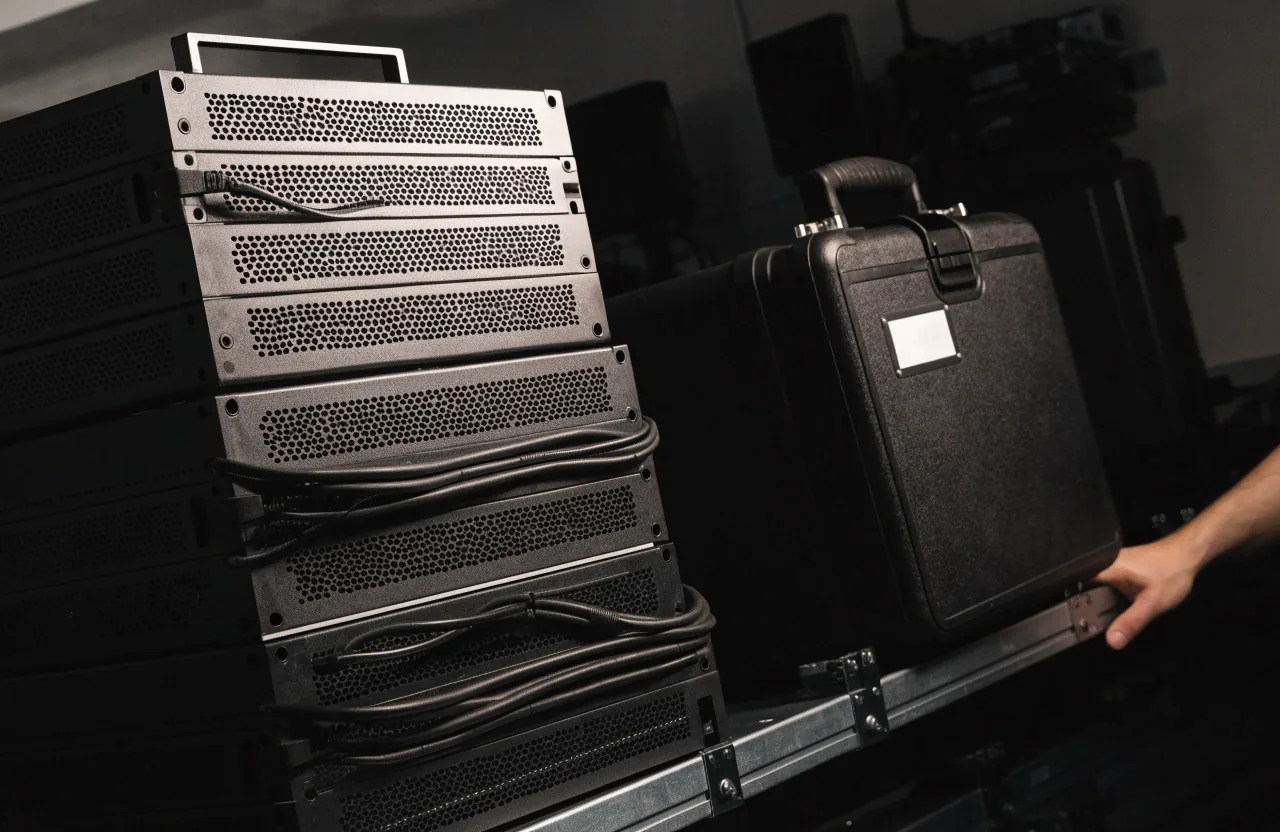
The lab environments you practice in mirror the kind of infrastructure an entry-level hire is handed on a first week: network gear, container platforms, a small cloud tenant, and a couple of machines you have to keep working. We keep the setup deliberately plain. The point is to learn the shape of the task, not to learn a specific vendor's dashboard.
Each lab ends with a short written debrief that names what you just built, why the technique matters, and what would change if the environment were twice the size. That last question is often the one interviewers actually ask.
The three paths we teach
Cybersecurity, DevOps, and AI
Cybersecurity
Defensive fundamentals first: how networks are laid out, how identity and access are managed, how to read logs and react to an alert. Later modules move into scripting and the practical habits of an analyst on shift.
Prepares for entry-level security certification objectives, taught by practitioners.
DevOps & Cloud
Version control, automated pipelines, containers, and the everyday rhythm of shipping and rolling back safely. Cloud modules cover a small set of core services in depth rather than a survey of everything.
Lab-heavy track, with the pipeline labs running in the same environments you will use at work.
AI & MLOps
Python and the data habits that come before modelling, then the practical work of packaging a model, tracking its versions, and watching it after deployment. Framed for people moving into an operations or engineering seat.
Written for learners with some programming background, not for research roles.

Instructor review is a written response on your approach, not a pass or fail.
Who teaches
Instructors who still do the work
Our course authors are working engineers, analysts, and platform people. They write their own lessons, record their own walkthroughs, and answer learner questions on the same tracks they built. That is the whole model: a small set of authors, each accountable for a subject they still practice.
Because the team is small, we do not publish a wall of instructor headshots or claim industry recognitions we have not earned. What we can tell you is the shape of the work: authors revise their tracks on a schedule, review submitted labs in writing, and are the same people you reach when you write in with a question about the material. We keep that answer surface small on purpose, so it stays honest.
If you want to know whether a specific instructor has worked in the area a track covers, write to us and ask. We would rather answer that question directly than pad the page with a credentials wall you cannot check.
What every learner can expect
These are the commitments we make on every track, regardless of which one you choose. They are the parts of the academy that stay the same when the curriculum changes.
A written syllabus
Every track page lists its modules, the labs inside each one, and the estimated study time before you commit. We publish what a course covers and, just as usefully, what it does not cover.
A real person on the other end
Questions about a lesson, a lab, or whether a track fits your background get an answer from someone who works on the course, during business hours in San Francisco.
Updated material
When a lab no longer reflects the current version of a tool, we rewrite it and note the change. Anyone who bought the course keeps access to the updated version at no extra cost.
Questions we get asked
If your question is not here, write to us and we will answer it plainly.
ContactWho is behind Rob-in-Hood Digital?
A small team of working engineers and analysts who write and maintain the courses themselves. We are an independent online course provider based in San Francisco, and we are not affiliated with any university, exam body, or hiring platform. When a track prepares for a third-party certification, we say so and link you to the official exam body for scheduling.
Do I need a technical background to start?
The cybersecurity and DevOps tracks open with fundamentals and assume no prior professional experience, though comfort with a computer and a willingness to read documentation both help. The AI and MLOps track assumes you have written some code before. Each track page lists its prerequisites in the same place so you can compare them side by side.
How long does a track take?
Most learners studying part-time finish a track over a few months, and each track page lists an estimated total study time alongside the module count. Your pace depends on how much time you can put in per week and how much you stop to practice. You keep access after you finish, so there is no reason to rush a lab.
Can I take more than one track?
Yes, and plenty of learners do. Cybersecurity and DevOps overlap around networking, Linux, and scripting, so the fundamentals carry across. AI and MLOps sits further from the other two and is usually taken on its own or after a DevOps track. If you are unsure which order suits your goal, write to us and describe where you are starting from.
What does a course cost, and is there a refund window?
Pricing and the refund window for each track are shown on its own page before you buy, so you can compare them against your budget without writing to us first. If a track is not the right fit, contact us within the stated window and we will walk you through the process. We do not use pressure tactics or countdown timers.
Ready to see which track fits?
Start with the course tracks overview to compare prerequisites, module counts, and study time across cybersecurity, DevOps, and AI. If you would rather talk it through first, the academy answers questions during business hours from the San Francisco office.
Where we are
Rob-in-Hood Digital
452 Tech Plaza, Suite 300
San Francisco, CA 94105, USA
Monday to Friday, 9:00 AM – 6:00 PM
+1-415-555-0192
info@rob-inhood.digital
Questions about a specific lesson are answered by the instructor who wrote it.